As you look for lift kits and truck accessories in Reading, first decide whether a leveling option or full suspension lift is right for you. A leveling kit corrects factory rake and maintains daily handling, while a suspension lift provides clearance, wheel travel, and larger tire fitment. Make sure you have exact year, trim, drivetrain, and suspension information to verify Rough Country compatibility. Plan your budget for tires, alignment, and add-ons including steps, lights, or liners—you'll see how the proper setup takes shape.
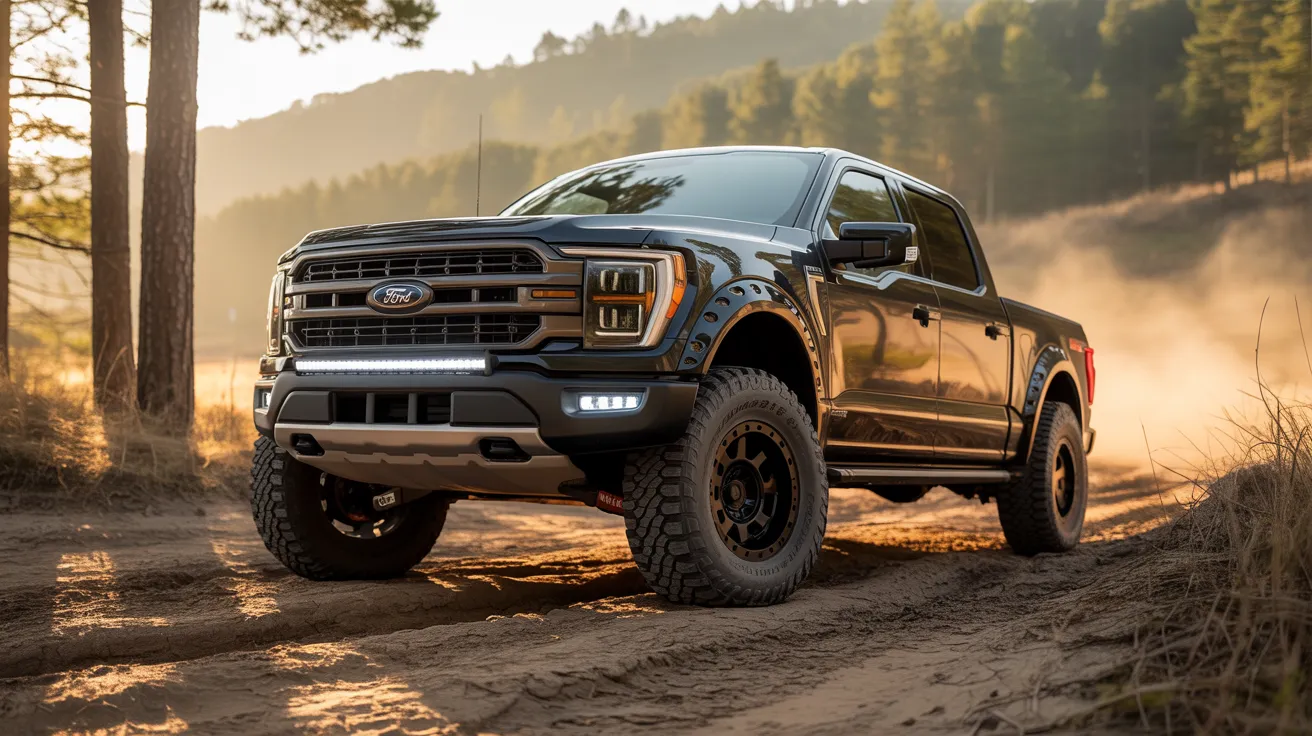
Key Takeaways
- Pick a leveling upgrade to correct factory rake while keeping near-stock handling and fitting slightly larger tires for daily driving.
- Choose a suspension lift kit for added ground clearance, wheel travel, and off-road performance, understanding that handling and steering may change.
- Validate proper fitment using your truck's year, model, make, drivetrain, trim, cab, bed, and suspension type prior to ordering your Rough Country parts.
- Match lift height and shocks to your use, whether commuting, trail driving, towing, or heavy off-road use.
- Reserve budget for beyond the kit cost itself, including alignment, labor, wheels, tires, shocks, and extra accessories like steps, lights, and liners.
Suspension Lift Kits vs Leveling Kits
Even though both upgrades modify your truck's look, suspension lift kits and leveling kits solve different problems and give unique results. A leveling kit usually raise the front to meet the rear, correcting factory rake with minimal change to geometry, ride height, and everyday drivability. You select one if you want a cleaner profile and capacity for bigger tires.
A suspension lift elevates the entire truck and adjusts critical parts to create increased clearance and suspension travel. You'll see larger advantages in ride height, off-road capability, and tire fitment, but you should expect handling changes, steering modifications, and an elevated center of gravity. When you want subtle visual enhancement, level it. When you require genuine clearance and articulation, apply a suspension lift and plan the supporting modifications around your use case.
Find the Rough Country lift kit that fits your truck.
Kick off by noting your truck's year, make, model, powertrain, and primary purpose, as Rough Country builds lift kits for exact structural design and capability targets. This information shows you which mounting hardware and suspension pieces can bolt on without spacing or alignment conflicts.
Next, check factory ride height, cab layout and bed setup, axle type, and whether your truck features 2WD, 4WD, or adaptive suspension. Rough Country fitment documentation help with this step, but you still need to verify fitment accuracy against trim-specific components and factory package variations. A kit that fits a Silverado 1500 may not fit a Trail reference Boss, and a Ram with pneumatic suspension requires different accommodations than a coil-spring truck. Once you verify fitment first, you sidestep installation issues, component conflicts, and reshipment delays.
Determine which Rough Country lift kit matches your driving habits.
Align the kit with your actual driving habits, and you'll receive improved ride comfort, reliability, and tire space without paying for capability you won't use. When your truck mainly commutes, select a basic Rough Country leveling kit or a suspension lift of 2 to 3.5 inches tuned for daily comfort and consistent steering feel.
When you alternate between pavement and trails, step up to a suspension upgrade equipped with premium shocks and corrected arm angles. You'll achieve stronger off road handling, enhanced articulation, and room for larger tires without taxing OEM components. For heavier trail use, emphasize lifted struts, Rough Country N3 or Vertex dampers, and suspension systems that preserve driveline geometry under load. The ideal Rough Country setup must match payload, speed, and terrain, and your preferred ride firmness.
Best Rough Country Truck Accessories
Enhance your suspension upgrade including Rough Country accessories that solve the real weak points you'll encounter after lifting and upgrading tires. Go with improved entry steps or side sliders, that restore entry to the cabin and provide lower-vehicle protection once your truck sits higher and wider.
Then focus on vision and control. Rough Country light bars extend usable sightlines on dim trails, jobsites, and remote roads without complex setup. Seat protectors and floor protection protect the cabin from soil, gravel, and water you'll drag in after trail use. Fender flares manage wheel spray and accent the broader stance provided by larger rubber. For towing or recovery, reinforced hitches, recovery hooks, and bumpers that support winches add utility without affecting fit. Go with items that match your truck's new geometry and workload.
What Budget Should You Plan for Your Build?
After you've selected the lift kit and supporting accessories, establish a budget exceeding the headline kit price. You'll need funds for suspension shocks, wheels, tire set, wheel alignment, installation labor, and any drivetrain or steering upgrades your vehicle needs. Brand reputation is important here; luxury kits tend to deliver tighter tolerances, enhanced comfort, and fewer install headaches.
In terms of practical budget estimates, expect entry-level spacer or leveling setups to start lower, whereas full suspension systems with control arms, tuned dampers, and larger tires surge upward. Install difficulty, service fees, and calibration work may contribute significantly. You must also budget supporting upgrades like gear changes, brake components, and recovery gear if you're building for trail use. When finances are limited, compare loan options carefully and stress reliability instead of fancy additions.
Questions You Might Have
Do Lift Kits Impact Factory Warranty?
Yes, lift kits may impact your original warranty, but they won't automatically cancel it. You encounter warranty implications should the manufacturer proves the lift modification brought about or was part of a failure. Engine, steering, suspension, and drivetrain problems frequently create dealer disputes. You should keep installation records, use premium parts, and maintain service schedules. That helps you refute denied warranties and safeguard warranty where the modification isn't responsible.
Do Larger Tires Require Re-Gearing My Truck?
Yes—should you jump multiple tire sizes, you'll typically require gear changes. For example, when you move from 31s to 35s, your truck can feel sluggish, hunt for gears, and put strain on the drivetrain under load. Adjusting gears reestablishes effective gear ratios, enabling you to restore acceleration, towing performance, and transmission behavior. You might not need regearing for a minor upsizing, but if power, fuel economy, or shift quality drop, it's usually the right call.
How Frequently Should You Inspect Lift Parts?
You should inspect suspension components following the initial 500 miles, then at every oil change or 3,000 to 5,000 miles, based on use. Periodic inspections help you catch bushing degradation, shock leakage, bracket damage, and alignment problems early. Check Fastener torque following aggressive off-road driving, hauling, or collisions. Should you operate in mud, salt, or rough terrain often, shorten intervals and check steering parts and suspension components at shorter intervals.
How does a lift kit affect towing or payload capacity?
Yes, a lift kit can alter your truck's towing and payload limits. When you increase ground clearance for more ground clearance, you shift suspension geometry, center of gravity, and force distribution on parts. That can compromise stability under load and increase drivetrain stress, most notably with bigger tires. You should follow your manufacturer's ratings unless an engineered kit explicitly states new ratings. Proper alignment, transmission ratios, and brake performance count as well.
Should alignment checks be done following installation of truck accessories?
Yes—if accessories adjust ride height, suspension geometry, steering angles, or tire measurement, you must have an alignment check. You'll witness the reality fast: slight changes can force your truck off-center, scrub tread, and compromise handling. A proper wheel alignment corrects camber, caster angle value, and toe to manufacturer spec. After certain installs, you may also need brake calibration for driver-assist accuracy. You extend tire lifespan, steering exactness, and real-world safety by confirming alignment straight away.
Conclusion
Selecting the correct suspension setup and accessories comes down to your driving style, your preferred appearance, and your financial constraints. When you pair a Rough Country lift kit to your driving style, you'll get capability, height, and appearance that work together like a well-tuned drivetrain. Include thoughtful upgrades, budget wisely, and you'll build a vehicle that's dependable for daily driving, capable off it, and prepared for any task ahead.